
Career Recognition Award – Nominations for 2024 OPEN NOW!
What is the award? The Australasian Cytometry Society Career Recognition Award is the highest recognition given by the society and carries with it all the rights and privileges of a Life Member with the exemption of payment of annual membership subscriptions.
Who to nominate? Nominees who have made a substantial contribution to the goals of the society through promoting research, development or applications and disseminating knowledge of cytometry in Australia and New Zealand. The nominee must have been a member of the ACS for 15 or more years. The ACS Executive may make this award to a person who, in its opinion has rendered distinguished service to the field of cytometry and/or the ACS.
When to nominate? The closing date is June 30th 2024, so start preparing your nomination. You should receive a confirmation that your nomination is under consideration a week after nominations close, and successful awards will be announced at the ACS Annual Conference 2024 alongside the 2023 recipients of the award.
How to nominate? To be considered for this award the following information must be provided: A nomination signed by one proposer, one seconder and five other signatories each of whom must be a Member of the ACS; a curriculum vitae summary and photograph suitable for publication on the ACS website; a statement summarising the nominee’s major contributions to the discipline and/or practice of cytometry, with information attesting to the high standards of conduct of the candidate; a letter of recommendation (approx. 1 page) from the nomination proposer; a bibliography of publications, contributions, service to their relevant discipline.
Notification of Outcome: Applications will be reviewed by the ACS Awards committee (composed of previous recipients) who will advise the council on the final decision. Awardees will be notified in early September and will be publically announced early in October 2024.
Email nominations to the ACS Secretary at: secretary@cytometry.org.au
Latest Round (2023)
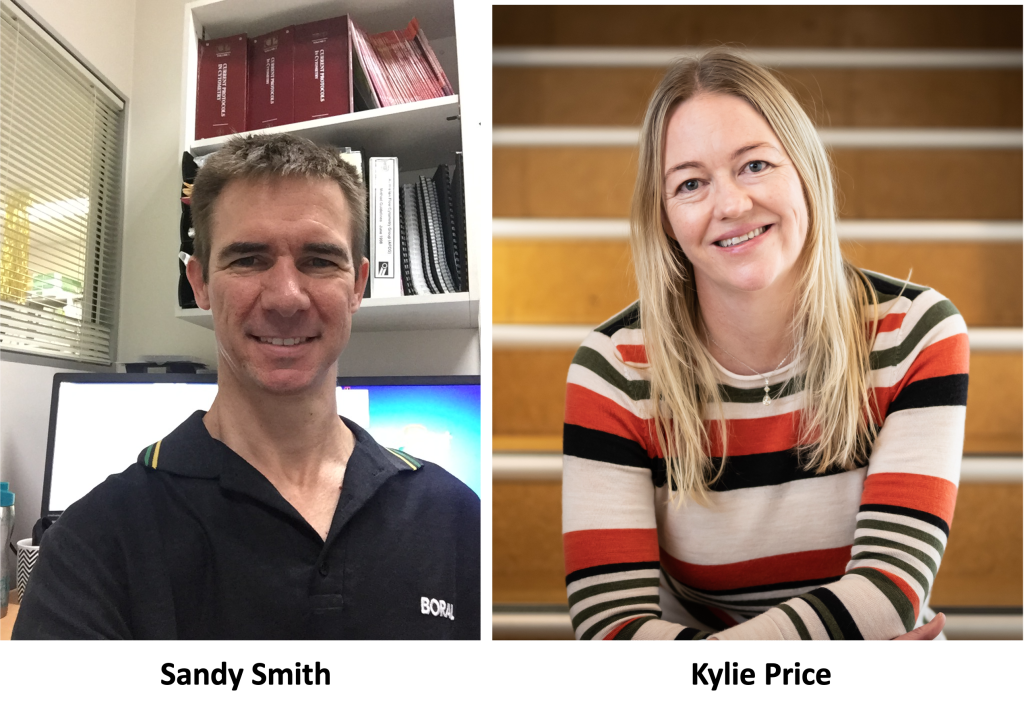
Sandy Smith (2023):
Sandy Smith was nominated by William (Bill) Sewell. Sandy has worked in clinical flow cytometry laboratories for 25 years and has been the scientific head of flow since 2003 (Institute of Clinical Pathology and Medical Research/ICPMR, Westmead Hospital, and formerly SydPath, St Vincents Hospital). He has developed special expertise in the applications of flow cytometry to the diagnosis and assessment of haematological malignancies and was also an expert in the assessment of lymphocyte subsets, and paediatric & adult immunodeficiencies. He specialises in developing panels and templates for clinical analysis & reporting.
He has been active on the Australian Flow Cytometry Group (AFCG)/Australasian Cytometry Society (ACS) Committees since 2010. He was President of the 2010 AFCG Conference Committee and then helped with the transition from the AFCG to the ACS which included forming the Executive Committee as a separate entity from the Conference Organising Committee. Then as ACS President for 2017-18, he played a key role in guiding the participation of the ACS in the CYTO Asia conference held in 2017 in Singapore and chaired the second & third ACS Roadshows. During all this time, Sandy was involved in many Clinical Guidelines Committees which are widely recognised. Sandy’s efforts over many years have contributed to the current healthy state of the ACS.
Sandy has advanced flow cytometry knowledge in Australia through his teaching and training. Recipients include laboratory scientists, technicians and medical staff. He promotes flow cytometry to staff from other departments, aiming to improve collaboration for the benefit of patient care through a better understanding of results and interpretation. He has always understood that flow cytometry is a piece of the patient care puzzle and that this changes as each technology improves; thus ongoing collaboration and reassessment are essential for the best patient outcomes.
Sandy’s laboratory was the first clinical facility in Australia to upgrade to 8 colours. He successfully led the laboratory through the many challenges of this upgrade. He was well known for his ability to trial and implement new technologies and has willingly provided advice to people working in other clinical laboratories, particularly at ACS conferences and workshops. Sandy also tries to improve communication between clinical and commercial cytometry entities through open and respectful feedback on vendor products and clinical laboratory needs, while carefully maintaining confidentiality.
Sandy has provided a lifetime contribution to the advancement of cytometry with the sharing of knowledge. He was respected for his enthusiasm to collaborate with others. Sandy has contributed regular presentations to AFCG, ACS and SydFlow meetings. He has also promoted the ACS in presentations at Conferences of the International Society of Laboratory Hematology and the Australian Institute of Medical Scientists. He has mentored many scientists around Australia in diagnostic flow cytometry.
Kylie Price (2023):
Kylie Price was nominated by Sam Small. Since joining the Multiple Sclerosis Research Group at the Malaghan Institute of Medical Research in 2003, Kylie Price conducted her first flow cytometry experiments under the tutelage of Joanna Roberts and has had a strong technology focus. She quickly became an impressive flow cytometrist and started managing the Cell Technology Suite at the Malaghan in 2005.
In her role managing this SRL, Kylie has grown and shaped the facility into a technology centre of research excellence, the most advanced in New Zealand. She has achieved this by being a powerful communicator which has enabled her to reach significant stakeholders such as the Hugh Green Foundation. It has been Kylie’s work with this charitable family trust that has propelled the technology housed within her SRL to a world-class level. Kylie has attracted more than $ 35 million NZD of philanthropic funding for the sole purpose of providing cutting-edge cytometric technology, education, and expert advice to scientists in New Zealand. The Hugh Green Cytometry Centre, as the SRL is named today, now services 80 internal researchers, and in the past decade has garnered 24 national and 33 international collaborations. Kylie’s advocacy for SRL recognition over the years has set her apart, she has raised the profile of the SRL such that acknowledgements of the SRL in publications have raised from 60% of published works utilising the facility in 2014 to 97% in 2022. This work has culminated in a set of acknowledgement guidelines published recently to empower SRL recognition globally. Alongside this publication, Kylie’s bibliography demonstrates a progression to last-author papers which showcase the implementation of the technology housed in her SRL, providing a tangible global impact of Kylie’s work as it outlines how researchers around the world can achieve high-quality cytometry data.
Kylie has a long track record of education, from teaching the basics of flow cytometry to students to presenting a workshop on CYTO University on measuring proliferation by flow cytometry, to speaking about SRL management and alternate funding routes at annual congresses, with endless engagements in between.
Kylie is dedicated to the societies she is a part of, namely ACS, ISAC, ASI, and the Technology Investment Network. She is a past president of ACS, where she held the role from 2014-2016. She was the first New Zealander to be elected to ISAC council, which she achieved in 2018, and held the position until 2020 when she was elected to the role of ISAC Secretary. She also chairs the Governance Committee where she leads the revision of governance policies, financial planning and forecasting, and risk management strategies to ensure business continuity. She has also organised several meetings, including a very successful ACS meeting in 2013, instigating the ACS to develop its first international meeting in collaboration with ISAC with the inaugural CYTO Asia in 2017, she was an organising committee member for CYTO 2013 and CYTO Virtual 2020, in addition to many other workshops and roadshows provided for the Australasian cytometry community. Kylie is a guaranteed yearly attendee to the ACS conference and CYTO, even as an invited speaker or panellist. Kylie is also on the editorial board for Cytometry Part A and Current Protocols in Cytometry and has raised the profile of cytometry in Australasia by encouraging work from local researchers to be published in these journals.
Kylie has contributed to the advancement of cytometry in New Zealand and wider Australasia through her dedication to providing the technology required to advance the science while building recognition of her SRL and of SRLs globally through the publication of acknowledgement guidelines. She has given back to the cytometry community through her societal work, education, and publications. Kylie has been a key member of ACS since joining in 2004 and continues to strive for advancement in cytometry and education for researchers in the region.
Past Recipients

(Photo by Adrian Smith)
William (Bill) Sewell BSc MB BS Syd, PhD Melb, FRCPA (Awarded 2019)
Bill was nominated by Neil McNamara and John Zaunders. Bill’s major contributions to the establishment of novel cytometric markers of leukaemia and lymphoma as well as advancement of the understanding of the pathogenesis of allergy and immunodeficiency is reflected in his significant track record of highly cited publications. Bill has provided more than 20 years of service to the cytometry society through a range of executive and volunteer roles, including vice president, involvement in conference organising committees for Sydney meetings, and invited speaker presentations at ACS events dating back as far as 1990. Bill has mentored a number of scientists who have developed into leaders of clinical cytometry in the region, including Sandy Smith, Margaret Cooley, Virginia Nink and Stephen Le.
John Zaunders, PhD (Awarded 2019)
John was nominated by Helen McGuire and Adrian Smith. John’s enormous contribution to characterisation of T cell subsets in viral infection is widely recognised and reflected in his outstanding publication track record, including a list of publications that was 17 pages long and had amassed more than 9,000 citations. John has led development of seminal innovations in cytometric tests, as well as the development of software for data analysis. John has been at every meeting since 2006 and has made an enormous contribution to the society, including as past president, secretary, councillor, conference chairperson and through the development of methods guidelines for lymphocyte phenotyping dating back to 1996. John is also very prominent in grass roots cytometry education and advancement in NSW.
Geza Paukovics Dip Med Cytopathol, B Med Lab Sci (Awarded 2019)
Geza was nominated by Eva Orlowski and Maggie Costa, with a letter of support from Suzanne Crowe AM. Geza was recognised for his pioneering work in establishing infectious PC3 sorting platforms in Australia, his leadership in changing the culture of recognition received by shared resource laboratory staff in research and research outputs, and his mentorship of many people who have gone on to become emerging national and international leaders of shared resource laboratories. This reflects not only an ability to impart technical knowledge and understanding of science, but an ability to foster a lifelong engagement with the field of cytometry. Geza has provided and facilitated service to the society over many years, including local organising committees, workshops and cytometry education

Heddy Zola, Awarded 2018
- Flinders University School of Medicine, Department of Clinical Immunology at Flinders Medical Centre, Women’s and Children’s Health Research Institute and Director of Research Director at SA Pathology
- Set up the first hybridoma lab and the first Cell Sorter Lab in SA
- Antibodies for Human Leukocyte Differentiation Antigens (HLDA) Workshops and helped establish CD9, CD14, CD15 and CD19.
- Chair of the international HLDA organisation from 2001 to 2007
- 240 peer-reviewed papers; contributed to key references
- Founding member of AFCG; hosted second Meeting 1979/80
- Chaired 27th AFCG, combined with HLDA and ASI 2004
Grace Chojnowski, Awarded 2017
- Alfred Hospital, Peter MacCallum CC, QIMR
- Member of the AFCG/ACS for 30 years
- First served on an organising committee in 1989
- First in Australia to set up at CD4 counting for HIV.
- Organised conferences & workshops
- Written guidelines, mentored, sat on national and international committees.
- Worked extensively for the flow cytometry community in Australia and abroad
- Supported Flow Cytometry communities in Africa, Asia and New Guinea.
Mary Sartor, Awarded 2017
- Westmead Hospital, NSW
- Reference Laboratory for international clinical trials
- Utility of Flow Cytometry Haematopoietic stem cell transplantation (CD34 & MRD)
- ACS/AFCG member since 1993; Secretary 2006
- Presenter, program & workshops organiser
- Clinical Guidelines
- Oncology QAP convenor 17 years
Geoff Osborne, Awarded 2017
- ANU, Queensland Brain Institute
- High end assay development, including sorting brain tumour cells
- Developed in-house instrumentation and software
- AFCG/ACS member since 1989
- Active contributor in Australasian Society: Council, Committees, Workshops
- International Cytometry Workshops (9 y)
Don Lear, Awarded 2017
- Queensland Repatriation Hospital; Sullivan & Nicolaides Pathology, Qld
- AFCG/ACS member for a long time
- Council Treasurer & Secretary; Clinical Guidelines, Conference & Workshop Committees