

ACS Career recognition ceremony at ACS 2024 Tasmania: left to right- Maggie Wang (ACS President), Kylie Price (2023 awardee), Adrian Smith (2024 awardee) and Robert Salomon (ACS President-elect)
The Australasian Cytometry Society Career Recognition Award is the highest recognition given by the society. Recipients are nominated by their peers (as ACS members) and applications are independently and extensively reviewed by the Awards Advisory Committee (also composed of previous recipients) which provides further recommendations to the ACS Council for endorsement. The awardees are members of the ACS (>15 years) and have made a substantial contribution to the goals of the society through promoting research, development or applications and disseminating knowledge of cytometry in Australia and New Zealand.
We are proud to announce the latest recipients of the prestigious career recognition award for distinguished service, who were honoured in a ceremony at this year’s ACS 2024 conference in Tasmania:
Sandy Smith (nominated by Bill Sewell):

The late Sandy Smith has worked in clinical flow cytometry laboratories for 25 years and has been the scientific head of flow since 2003 (Institute of Clinical Pathology and Medical Research/ICPMR, Westmead Hospital, and formerly SydPath, St Vincents Hospital). He has developed special expertise in the applications of flow cytometry to the diagnosis and assessment of haematological malignancies and was also an expert in the assessment of lymphocyte subsets, and paediatric & adult immunodeficiencies. He specialises in developing panels and templates for clinical analysis & reporting.
He was active on the Australian Flow Cytometry Group (AFCG)/Australasian Cytometry Society (ACS) Committees since 2010. He was President of the 2010 AFCG Conference Committee and then helped with the transition from the AFCG to the ACS which included forming the Executive Committee as a separate entity from the Conference Organising Committee. Then as ACS President for 2017-18, he played a key role in guiding the participation of the ACS in the CYTO Asia conference held in 2017 in Singapore and chaired the second & third ACS Roadshows. During all this time, Sandy was involved in many Clinical Guidelines Committees which are widely recognised. Sandy’s efforts over many years have contributed to the current healthy state of the ACS.
Sandy has advanced flow cytometry knowledge in Australia through his teaching and training. Recipients include laboratory scientists, technicians and medical staff. He promotes flow cytometry to staff from other departments, aiming to improve collaboration for the benefit of patient care through a better understanding of results and interpretation. He has always understood that flow cytometry is a piece of the patient care puzzle and that this changes as each technology improves; thus ongoing collaboration and reassessment are essential for the best patient outcomes.
Sandy’s laboratory was the first clinical facility in Australia to upgrade to 8 colours. He successfully led the laboratory through the many challenges of this upgrade. He was well known for his ability to trial and implement new technologies and has willingly provided advice to people working in other clinical laboratories, particularly at ACS conferences and workshops. Sandy also tries to improve communication between clinical and commercial cytometry entities through open and respectful feedback on vendor products and clinical laboratory needs, while carefully maintaining confidentiality.
Sandy has provided a lifetime contribution to the advancement of cytometry with the sharing of knowledge. He was respected for his enthusiasm to collaborate with others. Sandy has contributed regular presentations to AFCG, ACS and SydFlow meetings. He has also promoted the ACS in presentations at Conferences of the International Society of Laboratory Hematology and the Australian Institute of Medical Scientists. He has mentored many scientists around Australia in diagnostic flow cytometry. Sadly, Sandy passed away earlier this year.
Kylie Price (nominated by Sam Small):

Since joining the Multiple Sclerosis Research Group at the Malaghan Institute of Medical Research in 2003 and running her first flow cytometry experiments under the tutelage of Joanna Roberts, Kylie Price has had a strong technology focus. She quickly became an impressive flow cytometrist and started managing the Cell Technology Suite at the Malaghan in 2005.
In her role managing this SRL, Kylie has grown and shaped the facility into a technology centre of research excellence, the most advanced in New Zealand. She has achieved this by being a powerful communicator which has enabled her to reach significant stakeholders such as the Hugh Green Foundation. It has been Kylie’s work with this charitable family trust that has propelled the technology housed within her SRL to a world-class level. Kylie has attracted more than $ 35 million NZD of philanthropic funding for the sole purpose of providing cutting-edge cytometric technology, education, and expert advice to scientists in New Zealand. The Hugh Green Cytometry Centre, as the SRL is named today, now services 80 internal researchers, and in the past decade has garnered 24 national and 33 international collaborations. Kylie’s advocacy for SRL recognition over the years has set her apart, she has raised the profile of the SRL such that acknowledgements of the SRL in publications have raised from 60% of published works utilising the facility in 2014 to 97% in 2022. This work has culminated in a set of acknowledgement guidelines published recently to empower SRL recognition globally. Alongside this publication, Kylie’s bibliography demonstrates a progression to last-author papers which showcase the implementation of the technology housed in her SRL, providing a tangible global impact of Kylie’s work as it outlines how researchers around the world can achieve high-quality cytometry data.
Kylie has a long track record of education, from teaching the basics of flow cytometry to students to presenting a workshop on CYTO University on measuring proliferation by flow cytometry, to speaking about SRL management and alternate funding routes at annual congresses, with endless engagements in between.
Kylie is dedicated to the societies she is a part of, namely ACS, ISAC, ASI, and the Technology Investment Network. She is a past president of ACS, where she held the role from 2014-2016. She was the first New Zealander to be elected to ISAC council, which she achieved in 2018, and held the position until 2020 when she was elected to the role of ISAC Secretary. She also chairs the Governance Committee where she leads the revision of governance policies, financial planning and forecasting, and risk management strategies to ensure business continuity. She has also organised several meetings, including a very successful ACS meeting in 2013, instigating the ACS to develop its first international meeting in collaboration with ISAC with the inaugural CYTO Asia in 2017, she was an organising committee member for CYTO 2013 and CYTO Virtual 2020, in addition to many other workshops and roadshows provided for the Australasian cytometry community. Kylie is a guaranteed yearly attendee to the ACS conference and CYTO, even as an invited speaker or panellist. Kylie is also on the editorial board for Cytometry Part A and Current Protocols in Cytometry and has raised the profile of cytometry in Australasia by encouraging work from local researchers to be published in these journals.
Kylie has contributed to the advancement of cytometry in New Zealand and wider Australasia through her dedication to providing the technology required to advance the science while building recognition of her SRL and of SRLs globally through the publication of acknowledgement guidelines. She has given back to the cytometry community through her societal work, education, and publications. Kylie has been a key member of ACS since joining in 2004 and continues to strive for advancement in cytometry and education for researchers in the region.
Adrian Smith (nominated by Thomas Ashhurst & Avrill Apsland):
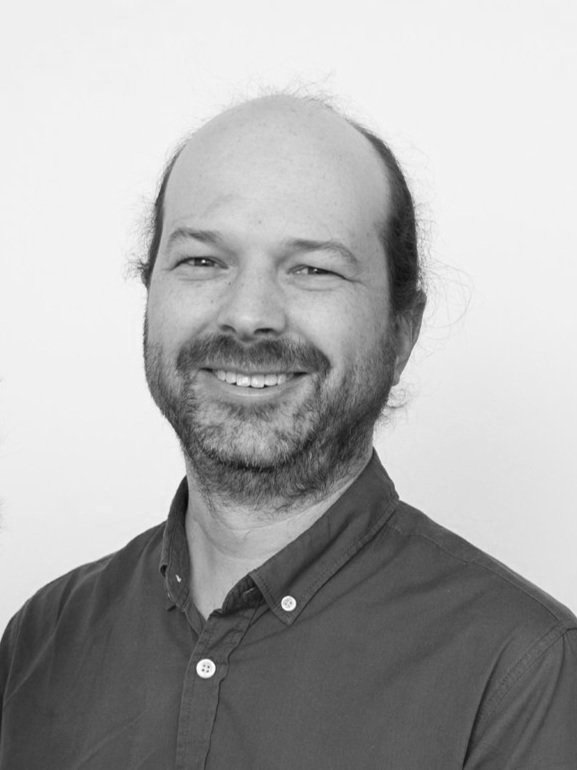
Dr. Adrian Smith started in cytometry over 20 years ago, completing his PhD in Immunology at the Centenary Institute where he leveraged advanced flow cytometry techniques to characterise peripheral CD4 T cell immune responses. He went on to lead the cytometric efforts of the institute as manager of the Cytometry and Imaging Facility in 2004, and then as director of the joint Advanced Cytometry Facility (a joint initiative of the Centenary Institute and University of Sydney) in 2007, now known as Sydney Cytometry.
Dr. Smith has made significant contributions to the field of cytometry. Early in his career he oversaw the growth of the Centenary Institute facility from three flow cytometers in 2004 to over thirty instruments, including a range of flow, mass, and image cytometers, in addition to advanced optical microscopes and cell sorters. Seeing the overlapping expertise across multiple fields of cytometry and microscopy, and identifying the value in diverse skill sets and expertise, he established a multidisciplinary team to support this advanced instrumentation, empowering biomedical research at the institute and University. Key to Dr. Smith’s pioneering work includes the development of novel cytometric methodologies, including the world’s first 10-laser analyser and cell sorter, the world’s first 27-colour flow cytometry panels, Australia’s first suspension and imaging mass cytometers, the University of Sydney’s first spectral cytometry platforms, and most recently, the University of Sydney’s first service laboratory for single-cell and spatial genomics as part of the core research facility. Dr. Smith is an internationally recognised leader in establishing the best practices and advancing flow cytometry, and under his leadership as Technical Director, the combination of technological advancement and collaborative expertise has made his facility one of Australia’s leading cytometry laboratories. In recognition of his efforts and innovations, he was awarded the inaugural Centenary Institute Innovation Award and received a commendation for outstanding effort in supporting research excellence during COVID-19.
Beyond his technical achievements, he is an exemplary leader, mentoring both students and professionals. Crucial to his mission is the training and equipping of researchers to both operate and make the best possible use of the sophisticated research equipment available to them. This is achieved through a variety of avenues from speaking engagements, workshops, tutorials, and one-one assistance and collaboration. He has supported numerous staff, teaching critical thinking as a foundation for innovation and troubleshooting, and has supported and actively sponsored facility staff through their careers.
Dr. Smith has dedicated significant time to the wider cytometry community. He has been a key leader in the Australasian Cytometry Society (ACS, formerly the Australasian Flow Cytometry Group) for over 15 years, and has contributed significantly to the societies success over this time. He has served in multiple roles including as the ACS President (2010-2014), Treasurer (2009-2010), and conference organiser (2010, 2016), among many others. During his term, Adrian led the society through change, with the development and adoption of a new governance model, embedding longer terms for the key roles within the Executive Council and separating conference responsibilities from the governance of the society. This change has enabled the maturity and growth the society has seen over the past 10 or so years, raising its standing and laying the groundwork for the partnerships and international recognition that is evident today. Dr. Adrian Smith’s contributions span technical innovation, leadership, and new scientific knowledge, all while serving in key leadership roles for both ACS and the International Society for the Advancement of Cytometry in support of a larger mission.
Neil McNamara (nominated by William Sewell):
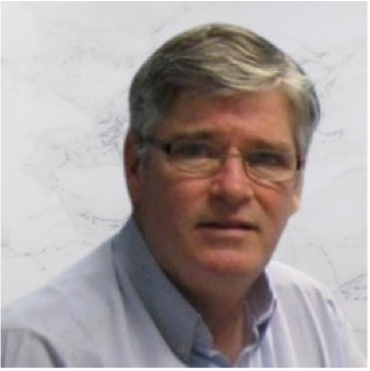
Neil McNamara has been working in clinical pathology for over 40 years, 19 years in haematology, blood bank, bone marrow transplant, special chemistries and research, 23 years in Flow cytometry (FC). While at Royal Prince Alfred Hospital he helped introduce PNH testing, at Concord Hospital he set up a new FC service, and at Liverpool Hospital streamlined a high throughput laboratory.
In 2009 he revitalised the Sydney flow group Sydflow in collaboration with and support of the ACS. He organised 30 meetings over 14 years. Meetings were generally a mix of clinical and research events sponsored for by interested companies. Notable presenters included Howard Shapira, David Gillis and Derek Hart. From 2016 he organised networking events for informal discussions between like minds. From 2017 he organised Sydflow Career Recognition Awards presented to local members for contributions to FC. The same year he introduced Case Study Test workshops. Some years he held 2 clinical, 2 research, 2 networking and one Case Study Test organised. It is a great local network.
Since 2006 he has been a member of the ACS for 18 years. In 2010 he was Secretary of the ACS, helping organise the Sydney conference. In 2011 he was the Treasurer of the newly formed ACS Executive which separated duties of organizing conferences to a separate committee. He oversaw organizational expenses more broadly, planned for budget stabilisation and redundancy measures should future conference funding fail. He assisted conference committees with this for the following two years.
In 2017 Career Recognition Awards started which he promoted to highlight the contribution of those who make significant contributions to the ACS and the field of FC. There have been ten recipients to date. This helped mid-career and ‘retired’ cytometrists continue to engage with the FC community.
From 2012 to 2016 he was the Clinical Liaison for the ACS. He has assisted sourcing speakers, chairing sessions, and giving workshops (2014, 2015) at ACS roadshows and meetings for the last 12 years. In 2014 he became the Clinical Guidelines coordinator seeing guidelines were an opportunity to bring the clinical flow community together to address a need only they could provide. He held this role for nine years from 2014 to 2023. In 2014 he chaired the Guidelines Taskforce which formed Work Groups producing seven updated or new guidelines in 2017 and a further three by 2022.
In 2017 the Therapeutic Goods and Administration required all In-House In Vitro Diagnostic tests to be registered, many of the clinical FC laboratories assays. There was some confusion among ACS members about this process, so he collaborated with the TGA Director of IVD Reforms, Life Sciences NATA department and ACS membership to produce an ACS Policy Document, “Clinical Flow Cytometry In Vitro Diagnostic Test Requirements”. This followed discussions held at Sydflow and the ACS Clinical Roadshow, Melbourne meetings in 2017. This raised the profile of ACS among government agencies and its own members.
From 2017 he prepared material and received ACS sponsorship for The Sydflow Case Study Test workshops, held for Haematology, Immunology registrars and scientists. From 2012 to 2016 he prepared teaching materials for FC tutorials he presented at the University of Technology Sydney. For over 20 years he has taught registrars and scientists as part of his job in hospitals across Sydney.
From 2015 to 2018 he represented hospital scientists statewide on the Health Professional Delegates Committee of the NSW Health Services Union. He lobbied at a state level to stop senior positions across NSW allied health professions being downgraded. In 2019 lobbied the ACS Executive to make representation for clinical FC scientists and technicians for the formation of the Council for Certification of the Medical Laboratory Scientific Workforce (CMLS). Career paths, competency and registration where areas the ACS had a voice. It now takes its place with other peak organisations referred to in final decisions and documentation.
His contributions to FC included developing clinical guidelines, improving networks and participation of ACS members, promoting career paths, and helping to advance the role and status of the ACS as a major professional clinical organisation nationwide.
